Gulf Research Program Fellows Reflect on the Power of Mentorship
Feature Story
By Stephanie Miceli
Last update February 5, 2021
During the last year, the COVID-19 pandemic has left many young STEM professionals feeling overwhelmed in a time of closed laboratories, paused projects, and time apart from colleagues. Mentors have had to change their approach. This doesn’t just mean checking in with mentees via Zoom instead of over coffee; it also entails encouraging them to focus on small wins and prioritize their well-being above all else.
High-quality mentorship is a cornerstone of the Gulf Research Program’s (GRP) fellowships. The National Academies are also committed to advancing the science of mentoring and understanding what makes a good mentor — and applying those insights to improve the fellowship experience.
Not only have GRP fellows found mentors in their supervisors and colleagues at their placement sites, but they’ve also found them among previous fellows. They have sought other fellows’ guidance on everything from navigating career transitions, to advocating for oneself in the workplace, to achieving diversity, equity, and inclusion in STEM fields. Four of GRP’s 2020-2021 Science Policy fellows spoke about what their mentors mean to them, and their advice for others who are starting their mentorship journey.
Unlocking New Career Possibilities
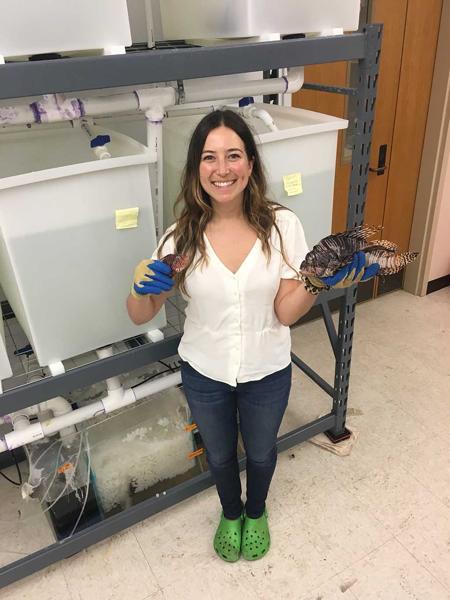
Hanna Bauer, M.S. (Oceanography and Coastal Science), Louisiana State University
Host Office: Texas Parks and Wildlife, Coastal Fisheries
“Especially in a year like no other, my mentor has been extremely helpful in orienting me [on] how to apply science in a state agency. This occurs on a practical level, like defining yet another acronym, and on a higher level when planning projects and defining goals. His experience gives me a much needed perspective on what types of work are useful and feasible, and what is needed for coastal and ocean conservation.”
Leading Yourself — and Others
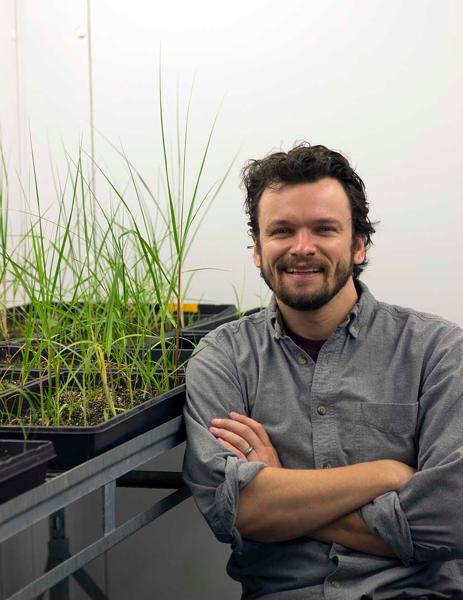
Stephen Formel, Ph.D. candidate (Ecology and Evolutionary Biology), Tulane University
Host Office: NOAA’s National Centers for Environmental Information
“My mentor has helped me acclimate to the work environment and develop my confidence by respecting my fears but also pushing me into challenges, like presenting project updates to upper-level committees. Since working as a fellow, I feel much more comfortable as an authority in the areas of science I have studied. I find myself more willing to lead in spite of uncertainty, and willing to learn on the fly. I respect and admire my mentor for their ability to maintain high energy, a good attitude, and to be a thoughtful and good listener who responds to subtle social cues. It is my first instance of working in an environment where good managers and leaders are not just the product of talent, but also [of] training and hard work. I have added management and supervising training to my career goals so that I may become an emotionally intelligent and effective manager and supervisor.”
Navigating a Professional Pivot
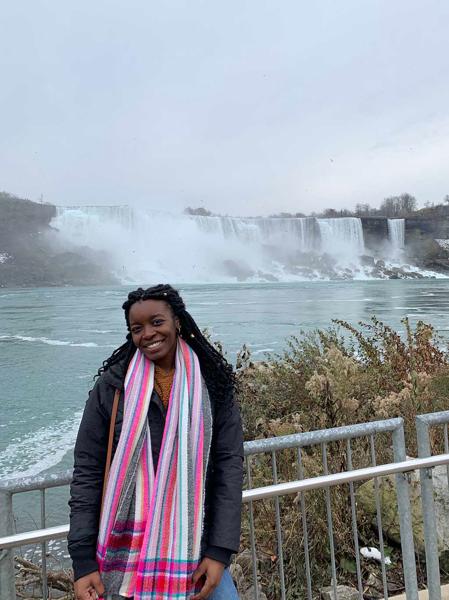
Simone Chapman, M.S. (Natural Resources: Environmental Conservation), University of New Hampshire
Host Office: Tampa Bay Regional Planning Council
“I have had a great mentor since starting this fellowship. I've had previous work experience in federal government and nonprofits, but not in regional government, which is completely different. They made sure to explain acronyms, organizational structure, and always made it known that I can ask questions at any moment if I’m confused. My mentor has always made sure to include me in meetings to give backgrounds on projects and to meet colleagues from outside of the organization. She has also pushed me to network and set up individual meetings with people that have the same career interest as me and talk with them about their professional journey.”
Encouraging Work-Life Balance
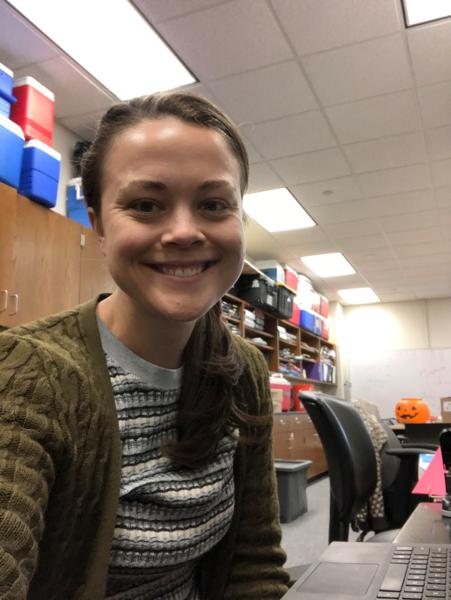
Jennifer Summers, Ph.D. candidate (Ecology and Evolutionary Biology), University of Tennessee, Knoxville
Host Office: Gulf Coast Ecosystem Restoration Council
“My mentor put me immediately at ease by treating me as a colleague and offering quick tips on adjusting to life in the office. They are kind and encourage healthy work-life balance. They encourage me to explore and express curiosity and try to learn as much as I can. They also try to challenge me and give me tasks that show they value my opinion and trust me. I have honestly never had a mentor be so implicitly kind and giving, and I am so grateful to have them.”
More like this


Events
Right Now & Next Up
Stay in the loop with can’t-miss sessions, live events, and activities happening over the next two days.
TRB Annual Meeting | January 11 - 15, 2026
January 11 - 15, 2026 | The TRB Annual Meeting brings together thousands of transportation professionals worldwide for sessions across all modes and sectors.