Undergraduate Students Explore ‘What the Gulf Needs Now’
Feature Story
By Maeghan Klinker
Last update May 19, 2023
While the virtual capabilities developed during the COVID-19 pandemic drastically altered the academic experience for many undergraduate students, the opportunity to engage in person remains invaluable. In March, the inaugural Gulf Scholars Conference presented such an opportunity for over 100 undergraduate students, faculty, staff, and community partners who gathered in New Orleans to learn, inspire, and connect at the event, which centered on the theme ‘What the Gulf Needs Now.’
The Gulf Scholars Program is a five-year, $12.7 million pilot program of the National Academies’ Gulf Research Program aimed at preparing undergraduate students to address pressing environmental, health, energy, and infrastructure challenges in the Gulf of Mexico region.
For Olivia Blanton, a junior at the University of Alabama at Birmingham, this ability to connect with other students from other Gulf state schools was an essential part of why she chose to be a Gulf Scholar.
“I really felt the need to have an environmental identity outside of my coursework and to have the opportunity to form connections with other universities and students that I wouldn’t interact with otherwise,” Blanton said.
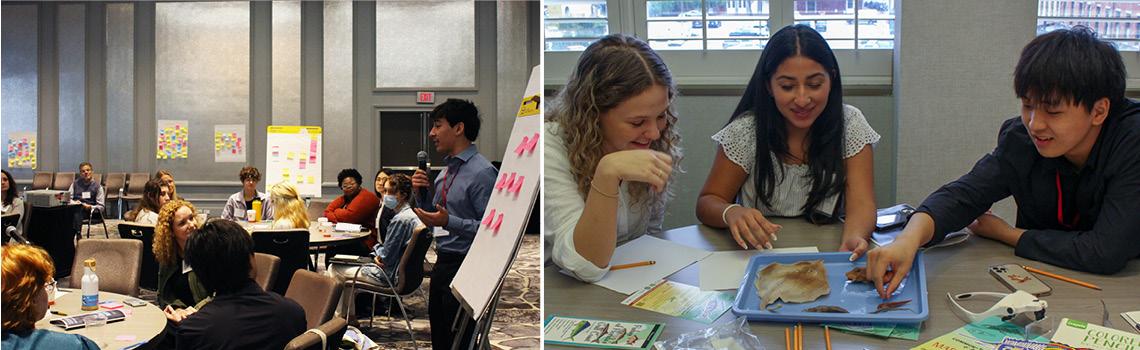
During the conference, students and faculty attended plenary sessions together, then divided into faculty or student breakout sessions. Plenary topics included panels with community leaders and academics discussing key challenges around environment, community health and resilience, and energy. They also explored how those challenges might be addressed to create a more resilient, equitable, and sustainable Gulf region. The plenary sessions culminated in a keynote lecture delivered by Reginald DesRoches, president of Rice University, on building resilient and equitable communities.
During breakout sessions, staff and faculty discussed challenges, lessons learned, and future opportunities for implementing a Gulf Scholars Program at their own institutions. Meanwhile, students engaged with community partners to discuss efforts to address critical local and regional challenges and explored ways for students to get involved with community projects.
Jeston Hale, a junior at Jackson State University, said the student breakouts were his favorite part of the conference “because it reassured me that I don’t have to have everything together in this moment, but it’s the small accomplishments that build up to the lifelong goals.”
A breakout session on fish adaptation, led by artist and biologist Brandon Ballengée, introduced students to his adaptation-themed outreach programs with coastal Louisiana communities. This art-science workshop explored Gulf fish species diversity, natural history, and specimen drawing. Students were given various preserved fish specimens, identification guides, magnifying glasses, and art supplies to try a hand at creating their own specimen drawings.
Another highlight of the conference was a screening of the film Hollow Tree. The short documentary follows three teenagers coming of age in their sinking homeland of Louisiana. Their different perspectives — as Indigenous, White, and Angolan young women — shape their story of the climate crisis as they travel to different sites along the Mississippi River where they engage with engineers, activists, and Indigenous leaders.
The film screening was followed by a panel session with the director, Kira Akerman, and two of the young women who participated in the documentary. The conversation sparked by the screening highlighted the intersectionality and deeply rooted causes of many of the challenges facing the Gulf region.
“The movie gave interesting perspectives on Native American and African American experiences,” said Hale, the junior at Jackson State. “We have to look at the past to be able to build the future.”
The final student session highlighted students’ perspectives on the future of the Gulf. Based on the discussions and lessons learned over the two-day conference, students created a set of hopes, ideas, and recommendations for the future of the Gulf of Mexico and brainstormed how their academic studies and experiences could prepare them in bringing about these desired futures as agents for change and leaders. Ideas included green city planning with an emphasis on nature-based solutions; the development of communal solar power and sustainable materials science; and innovation in sustainable agriculture, including offshore and vertical agricultural systems and regenerative farming practices.
“This conference gave me a lot of inspiration for environmental initiatives in Corpus Christi, Texas, and meeting a lot of other young people with similar frustrations and passions gave me hope that we’re not facing these challenges alone,” said Julia Nicholson, a junior at Texas A&M University - Corpus Christi.
“The Gulf Scholars Program emerged out of the recognition that preparing a new generation of change agents and leaders is essential to addressing the complex environmental, community, and energy challenges facing the Gulf region,” said Timothy Filbert, program manager of the Gulf Scholars Program. “This conference served an important community-building function, which is necessary for addressing these complex problems. One of the key student take-aways from this conference is that they have a whole network of peers, mentors, and community members out there [who are] willing and able to support them.”