Creating Self-Directed Resiliency Plans for General Aviation Airports (2024)
Chapter: Resilience Handbook: Creating Self-Directed Resiliency Plans for General Aviation Airports
RESILIENCE HANDBOOK
Creating Self-Directed Resiliency Plans for General Aviation Airports
This Resilience Handbook introduces a set of self-directed tools, resources, and information based on the latest resilience research, drawing from experience and insights from subject-matter experts, and reflects GA airports’ real-world needs and operating conditions. These toolkit contents are meant to be complementary to the processes and procedures currently in place and in no way should override required standards. The Resilience Handbook includes the following:
- An introduction to the concept of resilience;
- A review of the research team’s project approach that led to the development of the toolkit contents;
- An explanation of why resilience matters for GA airports;
- An introduction to the Self-Directed Resiliency Toolkit, its benefits, and additional resources; and
- A review of how to integrate resilience into planning and apply the elements of the Self-Directed Resiliency Toolkit to resilience best practices, including how to identify and address shocks and stressors.
Introduction to Resiliency
As the backbone of the aviation system, whether GA airports are classified as basic, local, regional, national, or reliever airports, or included in the National Plan of Integrated Airport Systems (NPIAS) 2023−2027 [Federal Aviation Administration (FAA) 2022] or not, they play a key role in their communities by providing relief for major airports, serving as hubs for emergency services (often as bases for police, firefighting services, and more), providing rural communities with access to the national transportation system, and becoming the home base for emergency operations in the event of catastrophic events. The ability of GA airports to be resilient during disruptions to operations is critical to the aviation systems and communities they serve. The research team completed this study to develop tools, resources, and information that GA airports of various categories and sizes can use to enhance their resilience. These toolkit contents guide airports in preparing to respond; adapt; and sustain themselves in the face of various stressors and shocks, including economic, social, political, environmental, and operational or infrastructural.
Resilience is “the ability to prepare for anticipated hazards, adapt to changing conditions, and withstand and recover rapidly from disruptions.” (National Institute of Standards and Technology 2023)
Shocks and stressors can be short-term (shocks) or long-term (stressors) disruptions or pressures that destabilize an airport and threaten safety, security, infrastructure, staff, and continuity of operations.
The National Preparedness System comprises a six-component process that provides a consistent and reliable approach to supporting decision-making, allocating resources, and measuring progress toward the national goal of achieving a secure and resilient nation with the capabilities required across

communities to prevent, protect against, mitigate, respond to, and recover from the threats and hazards that pose the greatest risk [Federal Emergency Management Agency (FEMA) 2011a]. The components of the system, as outlined in Figure 2, provide a basic and scalable approach to improving individual, organizational, and communal preparedness. The process provides a foundation for resilience and should inform all efforts taken to strengthen resilience for GA airports across the nation.
The key to resilience is comprehensively identifying the shocks and stressors GA airports across the country face by taking the necessary steps to address these impacts with the available industry resources and tools. These shocks include, but are not limited to, airplane accidents; severe weather; utility outages; fuel disruptions; natural disasters; and stressors such as employment challenges, aging infrastructure, climate change impacts, political and economic changes, and resource limitations.
Resilience planning is accomplished and matured by working with relevant stakeholders to reduce risks and continuously improve airport resilience capabilities over time. Effective resilience planning is critical for government, private-sector, and nongovernmental organizations, as each plays a role in saving lives, preserving property, and restoring essential community services and supplies during disaster incidents.
Project Approach
The objective for this research was to develop tools, resources, and information that GA airports of various categories and sizes can use to reduce their risk of disasters and enhance their resilience. The toolkit contents will guide airports in preparing to respond to, adapt to, and sustain themselves to various stressors or shocks. Throughout this project, the research team met with the ACRP project panel, comprising several experts from the aviation community who served in an advisory role. The first phase of the research process to develop the toolkit began with a thorough literature review of industry articles, reports, webinars, and presentations. This review provided
a baseline of knowledge and a thorough exploration of the understanding of resilience, shocks and stressors, available tools, resources, and information to minimize risks and impacts on operations. During the next phase, the initial airport outreach, the research team contacted GA airports. To ensure an even geographic distribution of respondents, the research team reached out to all 50 state aviation associations and departments of transportation to solicit interest in participating in targeted interviews that explored the issues, needs, opportunities, and best practices associated with resilience planning.
Following the initial airport outreach, the team completed an analysis of the 206 survey responses received to develop a shortlist of airports for the interview stage. The shortlist consisted of 19 airports, 5 backup airports, and the Alaska Department of Aviation. To provide diversity for this study, airports of varying sizes, locations, maturity in resilience-planning efforts, and resource availability were used to understand key challenges in resilience planning and commonly identified shocks and stressors. The research team made all possible efforts to interview at least one airport from each of the nine FAA regions for the broadest possible regional distribution. These targeted interviews included 18 interviews with representatives from each airport completed via web-conferencing platforms Microsoft Teams or Zoom. In addition to helping to identify which airports would make successful case studies, the interviews also assisted the research team in understanding the airports’ resilience gaps, which aided in the development of the toolkit contents.
The research team then moved to the third and final phase, case-study development. Using broad selection criteria, the team developed eight detailed case studies that provided critical context to the challenge of resilience planning at GA facilities. Airport case studies were organized to prioritize identifying unique or key data, with a focus on understanding how to develop tools, resources, and information to guide airports in considering and incorporating resilience into their planning, operations, and maintenance activities. The selected airport case studies were also used directly in creating the toolkit contents for the types of tools, resources, and information developed and for scaling the toolkit contents for various GA airport sizes, locations, and uses. At multiple stages throughout the project, the ACRP project panel provided feedback and insight to ensure the research team was thorough and delivered products that would be most helpful for GA airports. In addition, the research team conducted a pilot with six airports that provided feedback to refine the materials further to ensure effectiveness, understanding, and usage.
Why Should GA Airports Care About Resilience?
Airports in the United States have already begun to experience the impacts of climate crisis. Rare weather events such as 200-year floods, 100-year storms, and other extreme weather events now occur more frequently, as shown in Figure 3, because of climate change impacts. A shock like extreme flooding can cause a chain reaction of delays and cancellations of flights and events. Additional impacts include operational issues such as delays in regularly scheduled airport maintenance, damage to the airport building envelope, water pooling on the runway that impacts takeoff and landing, and water damage to the electrical infrastructure under the runway. As these examples demonstrate, airports cannot afford to wait to prepare for these climate-related events and subsequent vulnerabilities.
As connectors to rural communities, relievers of larger metropolitan airport systems, and providers of critical services, GA airports serve a fundamental role in the transportation system and generate nearly $246.8 billion in annual economic activity. They also serve critical functions before, during, and after disasters, acting as focal locations for distributing disaster relief and as search-and-rescue deployment bases for wildfires, storms, floods, and other natural hazards. Despite their significance, their role is often overlooked—until they cannot fulfill it.
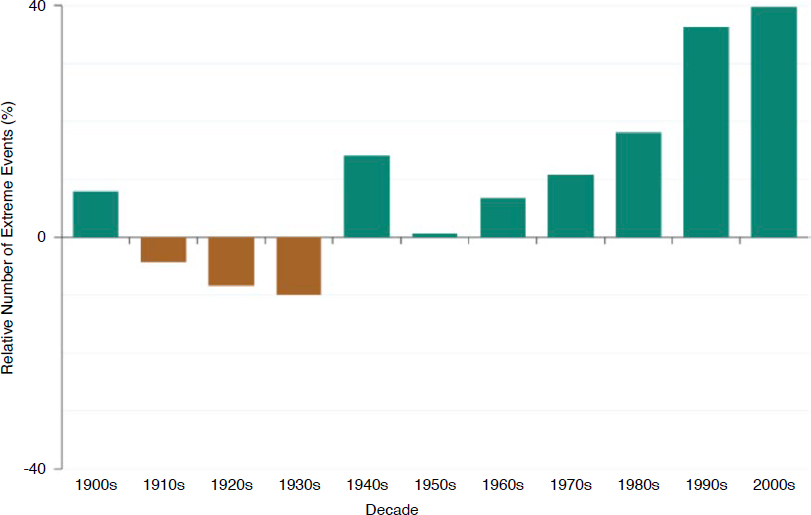
Figure 3. Observed trends in extreme U.S. weather events.
The current U.S. presidential administration has centered climate resilience within its key goals and a whole-of-government approach to mitigation, adaptation, and hardening of government infrastructure (Alliance for Aviation Across America 2018). The release of the U.S. Department of Transportation’s (U.S. DOT’s) Climate Action Plan: Revitalizing Efforts to Bolster Adaptation & Increase Resilience (2021), the United States 2021 Aviation Climate Action Plan (FAA 2021), and the U.S. Environmental Protection Agency’s (U.S. EPA’s) Climate Adaptation Action Plan (2021), among others, have proven that the significance of resilience planning has never been more apparent. Airports intent on hardening their infrastructure and operations and increasing resilience have received financial support through various funding streams to date, including federal, state, and local programs such as the FAA’s Airport Zero Emissions Vehicle and Infrastructure Pilot Program. The 2021 passage of the Infrastructure and Jobs Act (H.R. 3684, 117th Congress) will provide funding increases to expand resilience programs. Additional funding is expected to come from federal agencies and at regional and local levels. It will be key for GA airports to understand their needs related to resilience, to better posture themselves, and to take advantage of potential funding opportunities.
Resilience is key to preserving human life and assets, saving money, and planning for clearer engagement with airport stakeholders. However, the current resources for self-directed resilience planning available to GA airports lack the breadth and flexibility to succeed nationwide. Because of the disparity between basic or local and regional or national GA airports, the approach to resilience planning cannot be “one size fits all.” The information in this handbook and the Self-Directed Resiliency Toolkit is informed by the issues, needs, and opportunities specific to GA airports to advance the resilience of their facilities to reduce overall risks and impacts to allow airports the flexibility to address their risks and create strategies based on their unique needs and available resources.
Introduction to the Self-Directed Resiliency Toolkit
The Self-Directed Resiliency Toolkit, as shown in Figure 4, was developed to provide GA airport managers—often limited in resources and staff—with the information, tools, and processes necessary to enhance resilience cost-effectively and efficiently. It provides foundational information for GA airports to begin to develop and mature their resilience planning and risk mitigation. The materials in the toolkit are intended to be scalable to use and implement based on available personnel and resources. Through engagement with the toolkit contents, GA airport facilities can ensure their continued operational resilience to minimize and address disruptions to operations and continue providing invaluable services to their communities.
The Self-Directed Resiliency Toolkit is a collection of practical tools, resources, and information based on the latest resilience research, drawing from experience and insights from subject-matter experts, and reflects GA airports’ real-world needs and operating conditions. The toolkit contents enable the review of the entire resilience process, from evaluating and understanding risks, to developing strategies and plans, designing and conducting exercises, and coordinating and communicating with the community and other stakeholders.
Among its many benefits, this toolkit provides GA airports with tangible benefits, including the following abilities to:
- Identify the shocks and stressors most applicable to their airport and understand how to address them;
- Develop tailored strategies that seek to combine actions to “multi-solve” to gain efficiencies and optimize resources instead of addressing singular shocks and stressors individually;
- Optimize limited financial, staffing, or other resources (e.g., political, social, and environmental capital);
- Leverage lessons learned from similar airports and apply those lessons locally;
- Engage key stakeholders with proven strategies; and
- Communicate the critical functions of GA airports in communities when advocating for resources.

Resiliency efforts can take many forms (based on experience) and continuously improve and adapt. This innovative toolkit will empower GA airports to conduct cost-effective resilience planning and prepare facilities across the country for current and future shocks and stressors. See Tool A for a list of resilience-related resources that provide additional information.
How to Integrate Resilience into Planning
The tools, resources, and information in this toolkit will take users through the basic National Preparedness System process on a step-by-step basis. The toolkit contents are integrated with each step, as depicted in Figure 5. This toolkit focuses on the development of preparedness tools to build capabilities and support a structured approach to incorporating and implementing resilience. Capabilities are the interdependent elements of preparedness that require the use of existing networks and activities. The tools and resources facilitate the coordination of efforts; improve training and exercise programs; promote innovation; leverage and enhance capacity; and ensure administrative, finance, and logistics systems are in place to support these capabilities. As risks and resources evolve, resilience planning helps to ensure airports are prepared to address shocks and stressors. The key to preparation is that airports start to process and understand their plans in the event of a shock or stressor and begin to formulate strategies to be continued, built on, and improved on for different types of incidents.
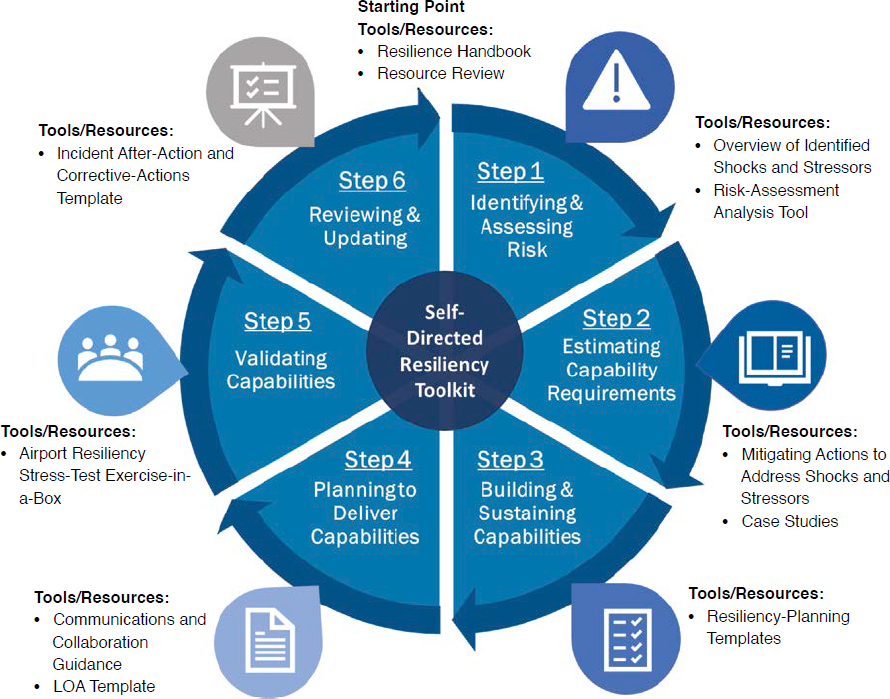
Table 2. Self-Directed Resiliency Toolkit tools and resources.
| Step | Tool | Resource |
|---|---|---|
| Start | A | Resource Review |
| 1 | B | Overview of Identified Shocks and Stressors |
| C | Risk-Assessment Analysis Tool | |
| 2 | D | Mitigating Actions to Address Shocks and Stressors |
| E | Case Studies | |
| 3 | F | Emergency Communications Plan Template |
| G | Airport Emergency Plan Template | |
| H | Incident Mitigation Plan Template | |
| I | Stakeholder Engagement Checklist Template | |
| J | Incident Command System Template | |
| 4 | K | Communications and Collaboration Guidelines |
| L | Aircraft Rescue and Firefighting Letter of Agreement Template | |
| 5 | M | Airport Resiliency Stress-Test Exercise-in-a-Box |
| 6 | N | Incident After-Action and Corrective-Actions Template |
Table 2 outlines the associated sections for the tools, resources, and information in the toolkit aligned with each step.
Starting Point: Resource Review
The resource review contains more than 70 resources available on resilience. This tool, as described in Table 3, should be studied to help think about risk before the planning process begins. It will help to familiarize users with resilience and will be a valuable reference point to use throughout the planning process.
Step 1: Identifying and Assessing Risk
Developing and maintaining an understanding of the shocks and stressors airports face can be used to build and sustain resilient planning efforts. This step includes a risk assessment to collect the consequences or impacts of the projected shocks and stressors (see Table 4).
Risk assessment creates a foundation for understanding common and historical risks and impacts on airports. Using the risk analysis tool will enable airports to identify which shocks and stressors they should focus on and their corresponding impacts. Once all the shocks and stressors are identified, the airport can then prioritize them to identify which ones to focus on that have a more significant impact and lay out a plan to increase their resilience.
Table 3. Starting point tool, resource, and description.
| Tool | Resource | Description |
|---|---|---|
| A | Resource Review | This tool provides more than 70 resources for resilience planning. It includes key takeaways, notes, and key themes to help users narrow their searches. |
Table 4. Step 1 tools, resources, and descriptions.
| Tool | Resource | Description |
|---|---|---|
| B | Overview of Identified Shocks and Stressors | This resource provides an overview of relevant shocks and stressors for GA airports based on interviews conducted with GA airports and additional research. |
| C | Risk-Assessment Analysis Tool | This tool is used to identify shocks and stressors for users’ airports, prioritize them, and review their impacts. |
Step 2: Estimating Capability Requirements
By using the results and desired outcomes from the risk assessment, airports can identify the types and levels of capacity needed to address their shocks and stressors. Estimating the capabilities needed in prevention, protection, mitigation, response, and recovery will enable the airport to identify gaps that need to be closed and requirements to sustain the current capabilities (see Table 5).
Plans should be built on the foundation of identifying and prioritizing shocks and stressors, and the focus should be on looking at common best practices for mitigating risks. Generating this list of best practices will enable the airport to start assessing current measures in place and gaps to identify additional requirements (e.g., staffing and funding) needed to implement different strategies to tackle their shocks and stressors.
Step 3: Building and Sustaining Capabilities
After estimating capability requirements, existing and needed capabilities can be analyzed to identify gaps. Once the analysis is complete, the airport should determine how to address and build capabilities with limited resources (see Table 6). As capabilities are built, training and education can be used to develop and strengthen the specific knowledge, skills, and abilities required to meet each capability’s target.
Looking across the shocks and stressors to identify the interdependencies will enable airports to multi-solve problems. For example, suppose the airport is subject to several weather events. In that case, the airport can identify several related actions and combine and prioritize them to develop long-term strategies and capabilities that continue to improve with resources while reducing several risks over time.
Table 5. Step 2 tools, resources, and descriptions.
| Tool | Resource | Description |
|---|---|---|
| D | Mitigating Actions to Address Shocks and Stressors | This resource provides best practices, strategies, and mitigating actions gathered during the interviews with GA airports to address shocks and stressors. |
| E | Case Studies | The case studies provide more in-depth information from GA airports’ best practices to further identify resources needed to address shocks and stressors. |
Table 6. Step 3 tools, resources, and descriptions.
| Tool | Resource | Description |
|---|---|---|
| F | Emergency Communications Plan Template | This tool provides a template for compiling contact information for contacts with whom airport personnel communicate daily and during emergencies. |
| G | Airport Emergency Plan Template | This tool is intended to aid in the methodology and approach to preparing for, responding to, and recovering from shocks and stressors. |
| H | Incident Mitigation Plan Template | This tool is intended to aid in the methodology and approach to identifying potential risks and developing strategies to protect staff, tenants, stakeholders, and property from similar events. |
| I | Stakeholder Engagement Checklist Template | This tool is meant to aid in the methodology and approach to interacting and communicating with stakeholders. |
| J | Incident Command System Template | This resource provides an overview of the Incident Command System and a template to build the structure when an incident occurs. |
Step 4: Planning to Deliver Capabilities
When implementing risk-reduction actions, for example, gathering feedback on a planned security system installation, it is important to create plans for coordinating with stakeholders and communities. The construction of these plans should engage relationships with current community stakeholders and expand to additional stakeholders to encourage a communal approach. The toolkit contents provide advice and templates for the starting point of community engagement. The airport should also incorporate current activities (e.g., events with the community) that have already been implemented to help minimize economic risk. See Table 7 for Step 4 tools and descriptions.
Step 5: Validating Capabilities
Measuring progress toward delivering capabilities can dictate how and where airports should allocate their resources. This measurement of progress can be done through regular exercises and assessments to test and validate plans, policies, and procedures.
Table 7. Step 4 tools, resources, and descriptions.
| Tool | Resource | Description |
|---|---|---|
| K | Communications and Collaboration Guidelines | This resource is meant to aid in the methodology and approach to communicating and coordinating with internal and external stakeholders before, during, and after an incident. |
| L | Aircraft Rescue and Firefighting Letter of Agreement Template | This resource is meant to aid in the approach to communicating and coordinating with air rescue and firefighting first-responder personnel during and after an incident. |
Table 8. Step 5 tool, resource, and description.
| Tool | Resource | Description |
|---|---|---|
| M | Airport Resiliency Stress-Test Exercise-in-a-Box | This tool aims to provide resources for GA airports to conduct a resilience stress test of emergency plans, policies, and procedures. |
Table 9. Step 6 tool, resource, and description.
| Tool | Resource | Description |
|---|---|---|
| N | Incident After-Action and Corrective-Actions Template | This tool provides a template for incident after-action meetings and a corrective-actions template. |
It is vital to bring together all stakeholders once a plan, policy, or procedure has been created to help identify any further gaps and address them with courses of action to correct and ensure the plan, policy, or procedure can be implemented successfully. Using the Stress-Test Exercise-in-a-Box allows the airport to walk through various scenarios to test out plans and identify any potential blind spots (see Table 8).
Step 6: Reviewing and Updating
Last, it is vital to regularly review and update all plans, policies, and procedures. The review should be based on a current risk assessment and use information gathered during the validation process.
Reviewing plans, policies, and procedures after an incident has occurred to identify successes and opportunities to improve is critical. A best practice is to conduct an after-action meeting within 1–2 weeks following an incident to aid in identifying corrective actions (e.g., new training, additional grants, mature stakeholder relationships) to better posture the airport in the face of a similar shock or stressor in the future (see Table 9).
Resilience Plan Development Checklist
The Resilience Plan Development Checklist (see Figure 6) outlines the tasks required for GA airports to create a thorough and holistic resilience plan to address potential threats and hazards. Additionally, the checklist allows GA airport leadership to assign each task to a staff member and confirm the completion of the task. Each task in the checklist corresponds to a tool provided in the Self-Directed Resiliency Toolkit.


