Xavier Cortada: Climate Science Art (2024)
Chapter: Art in Antarctica South Pole; 90N North Pole
Art in Antarctica South Pole
Xavier Cortada, recipient of a 2006-2007 National Science Foundation Antarctic Artists and Writers Program fellowship, traveled to Antarctica to implement a range of projects and installations. He strived to create art in Antarctica to demonstrate how interconnected we are to each other and the planet. The artist explored environmental concerns and the passage of time. He created site-specific installations, sketched, painted, photographed, videotaped, and conducted interviews with scientists to document their work in Antarctica.
Cortada installed 51 flags–and an ice sculpture of a mangrove seedling–on a moving glacier to mark the passage of time; produced a series of Antarctic Ice Paintings made from melting Antarctic ice; created a collaborative mural with scientists working there; painted a portrait of Sir Ernest Shackleton for the South Pole (permanently placing the famed explorer in the place that eluded him in life); and placed flags for endangered animals from each time zone around the South Pole. He also created an installation with 24 black shoes at the South Pole to express the environmental concerns of people living in the world to the north.
In a related performance, Cortada recited quotes from 24 people across 24 time zones describing the personal impacts of climate change. Each quote was recited above a shoe, painted with an acrylic mix of soil samples from the Dry Valleys in Antarctica, that is representative of its specific time zone – the 24 shoes were arranged in a circle, each aligned with its corresponding longitude as they all converge on the South Pole.

90N North Pole
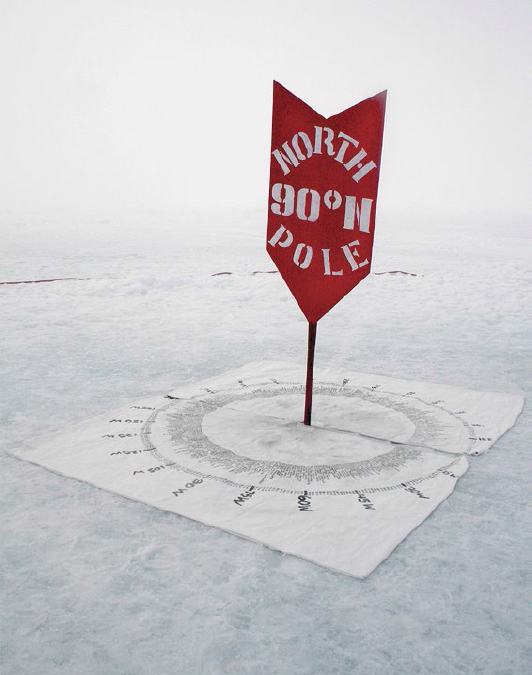
As a New York Foundation for the Arts-sponsored artist, Xavier Cortada traveled to the North Pole via a Russian icebreaker in June 2008 to create new works and site-specific installations addressing environmental concerns. Having journeyed to the South Pole the prior year, Cortada wanted to make art at both extreme ends of the planet to address global climate change at every point in between.
The North Pole works included the creation of Arctic Ice Paintings, a performance of the North Pole Dinner Party aboard a Russian icebreaker (pictured above), a reinterpretation of Cortada’s Longitudinal Installation and Endangered World ritualistic installations from the South Pole, and the launch of Native Flags, a participatory eco-art project designed to engage people in restoring native habitats for plants and animals in urban areas.

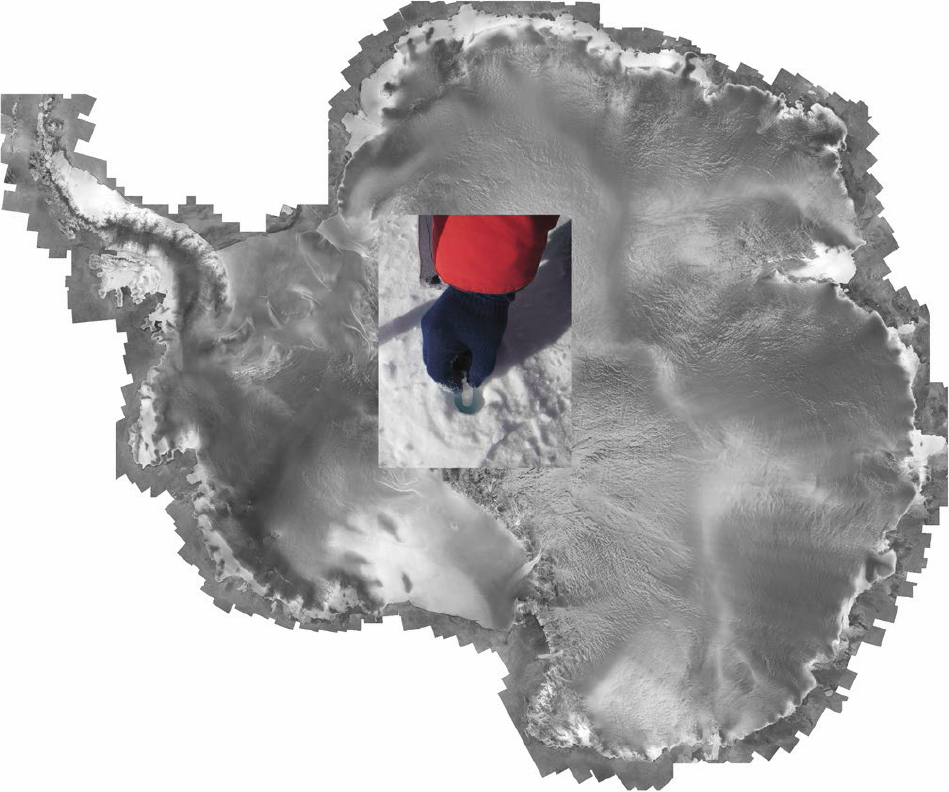
The 150,000-year Journey, 2007
Digital print
Xavier Cortada placed an ice replica of a mangrove seedling in the moving ice sheet that blankets the South Pole. Embedded in the ice, the replica will move 10 meters a year towards the Weddell Sea, 1,400 kilometers away. In about 150,000 years, it will arrive at the coastline and conceptually set its roots.
The 150,000-year Journey uses the South Pole to address a concern of the artist: the travails of an immigrant’s journey — the displacement, solitude, and struggle to integrate into society. More universally, the art piece explores humankind as it evolves. Since childhood, Cortada has been fascinated by mangrove seedlings, and he sees them as a metaphor for an immigrant. He writes, “They float in the water until they touch a sandbar and set their roots and as they grow, they capture sediment within their roots and build land, just like immigrants landing here build community.”
It will take almost 150,000 years for this artwork to be completed. What will our world look like then? Will we still be as focused on race and ethnicity by the time this mangrove seedling lands in the sea? Will our world be dramatically different, will the polar caps have melted? How much will such melting shorten the journey?
Through the artwork, Cortada invites us to reflect on our role as humans on Earth. Juxtaposing Antarctic time frames with human time frames (see The Markers project also on view in this gallery) reaffirms the notion that we are simply custodians of the planet who should learn to live in harmony with it.

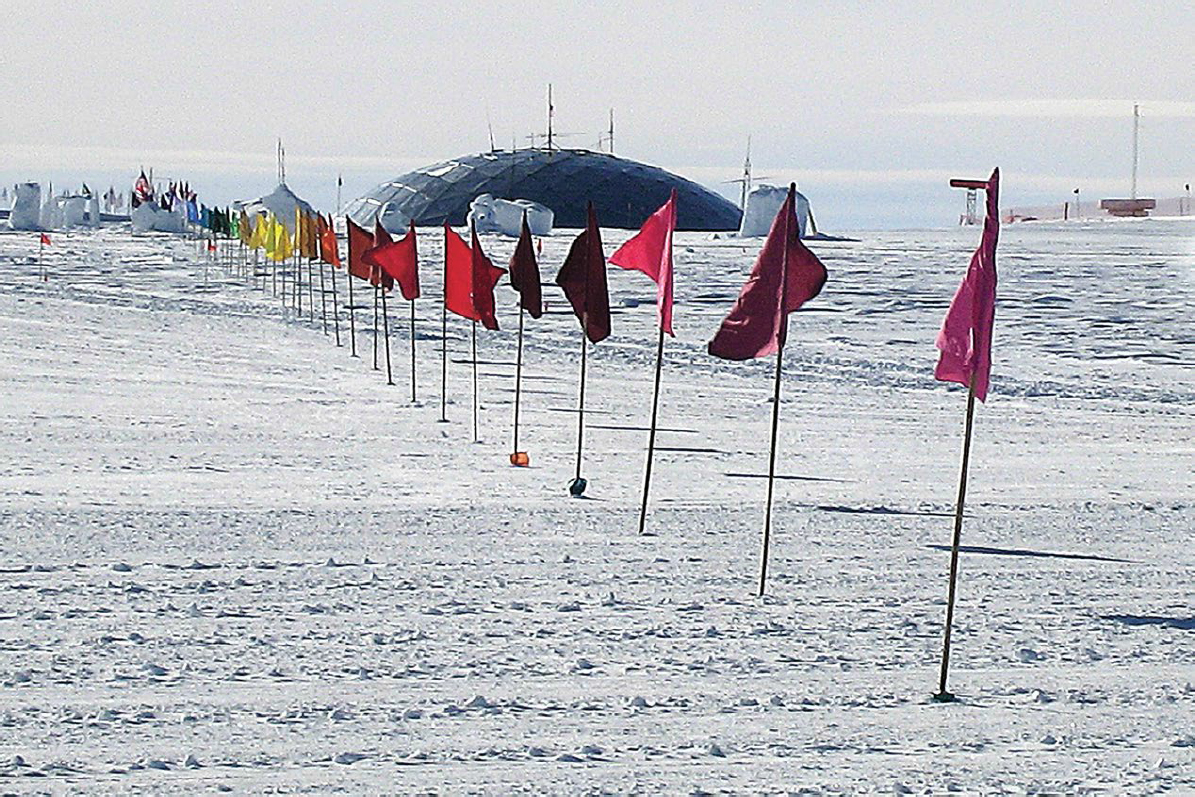
The Markers, 2008
Digital print
Xavier Cortada used the moving ice sheet that blankets the South Pole to mark time: Important events that have moved the world forward during the past 50 years (The Markers) are juxtaposed with events that occur in broader geological time frames (The 150,000-year Journey).
To create The Markers, Cortada installed 51 different colored flags on the moving ice sheet that covers the South Pole. Each flag was 10 meters apart and marked where the South Pole stood during each of the previous 50 years (when humans first inhabited the South Pole). Each flag also displayed the coordinates of the location in the world where an important event took place that year.

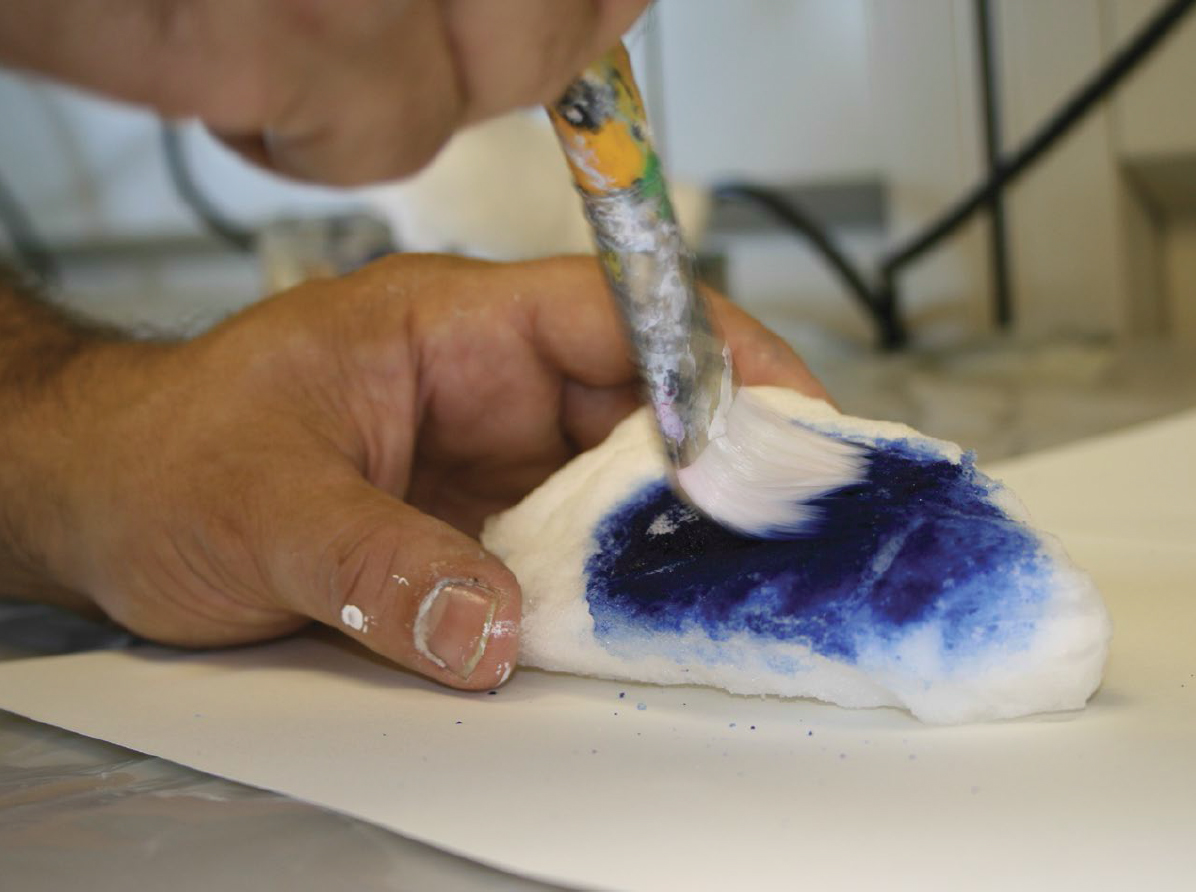
Antarctic Ice Paintings: Global Coastlines Series, 2007
Antarctic ice, sediment from Antarctica’s Dry Valleys, and mixed media on paper
Xavier Cortada created this series using sea ice, glacier, and sediment samples provided by scientists working in Antarctica, making the continent itself both the subject and the medium of the art. The paintings, serene yet foreboding, are a poignant reflection on the impact of climate change on the artist’s hometown, Miami, and the world. Made in Antarctica, these artworks use the ice that threatens to melt and submerge coastal cities.

Arctic Ice Paintings, 2008
North Pole sea ice, acrylic, and mixed media on paper
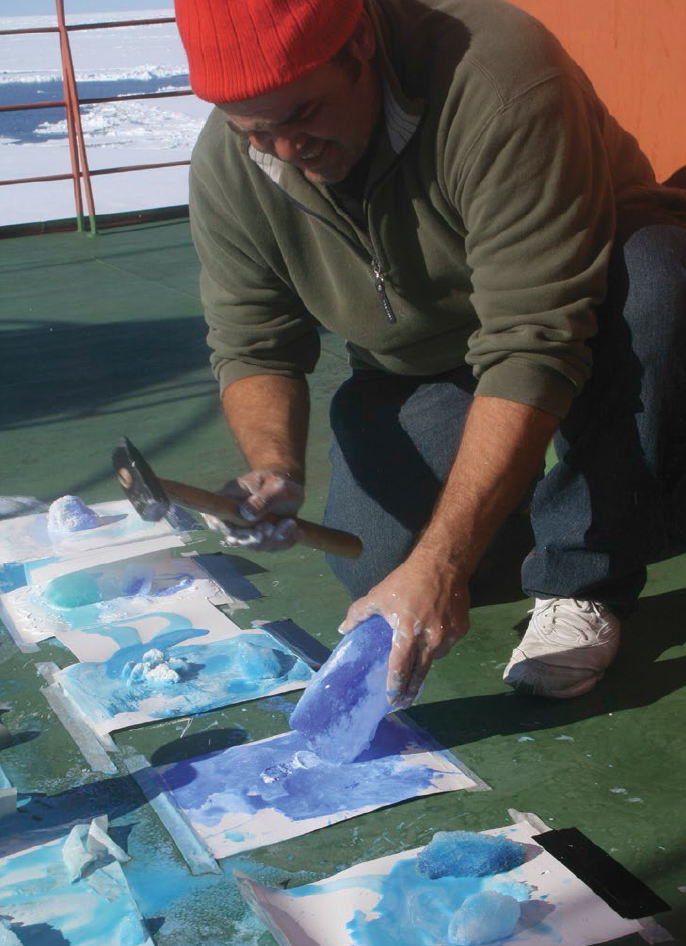
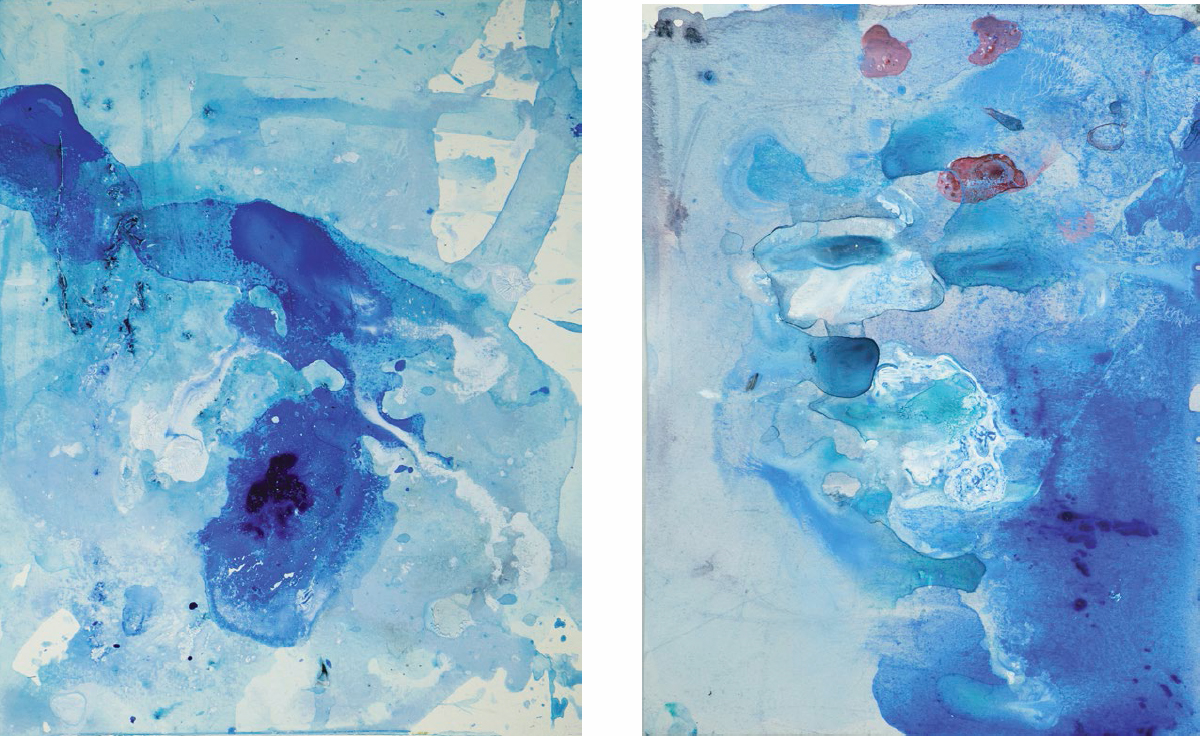
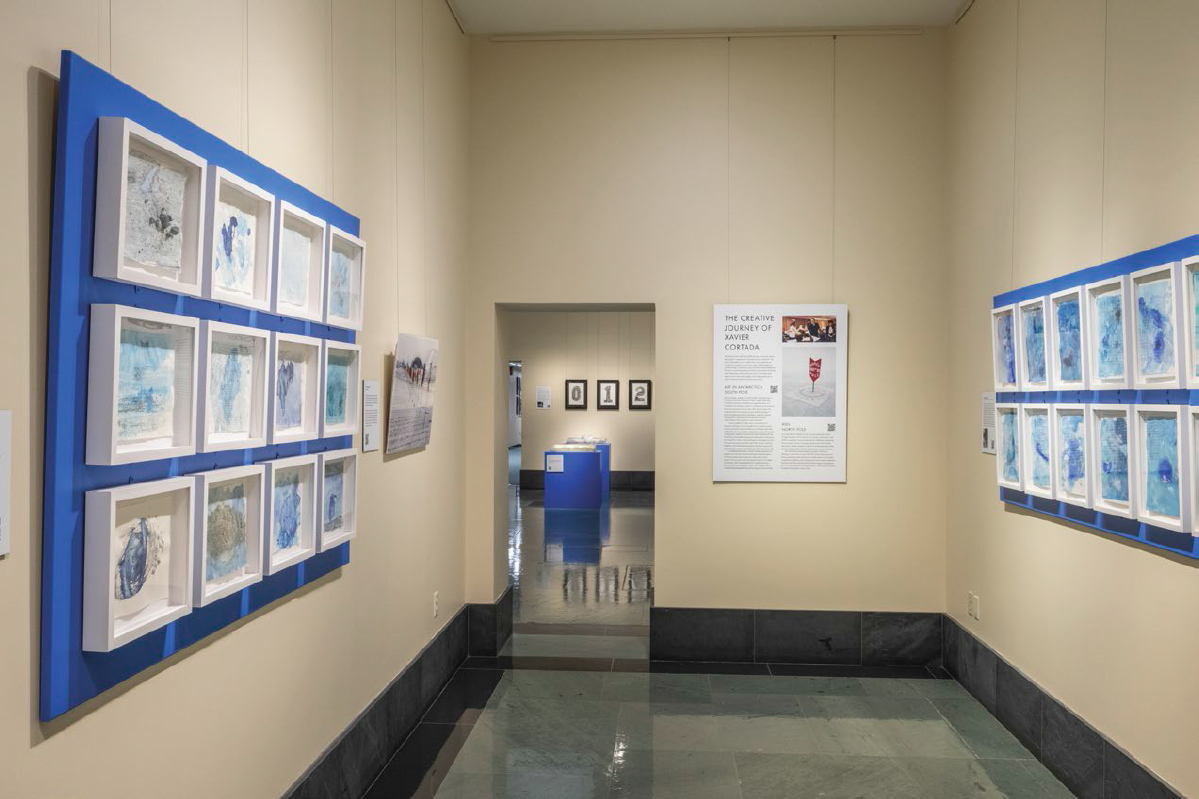
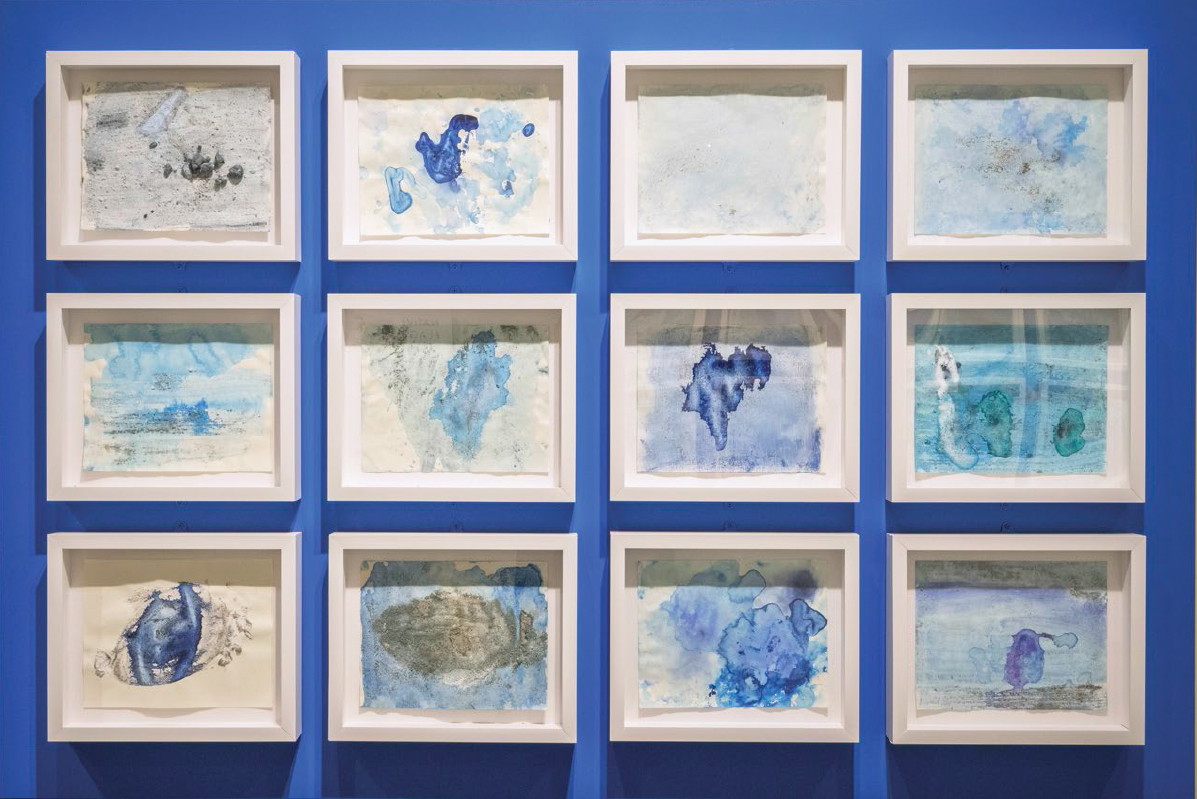
In response to his Antarctic Ice Paintings created 18 months earlier, Xavier Cortada used Arctic ice to produce a series of paintings aboard a Russian icebreaker returning from the North Pole. He taped pieces of paper to the top deck of the icebreaker and placed North Pole sea ice and paint on them. As the icebreaker journeyed south from 90 degrees North, carving through the sea ice by sliding on top of it and then crushing down through it, Cortada’s ice melted and the pooled water moved as it evaporated, creating the Arctic Ice Paintings. He sought to use the vessel’s motion to capture the existence of sea ice before it vanished, understanding that traversing the Arctic Ocean in the decades to come would not require an icebreaker.

Arctic Ice Paintings, 2008
North Pole sea ice, acrylic, and mixed media on paper, 12 x 9 inches each.
In 2007, Cortada created a series of paintings using sea ice, glacier, and sediment samples provided by scientists working in Antarctica, making the continent itself both the subject and the medium of the art. The paintings, serene yet foreboding, are a poignant reflection on the impact of climate change on the artist’s hometown of Miami—and the world. Made in Antarctica, these artworks use the ice that threatens to melt and submerge coastal cities.
In response to his Antarctic Ice Paintings created 18 months earlier, Cortada used arctic ice to produce a series of paintings aboard a Russian icebreaker returning from the North Pole. He taped pieces of paper to the top deck of the icebreaker and placed North Pole sea ice and paint on them. As the icebreaker journeyed south from 90 degrees north, carving through the sea ice by sliding on top of it and then crushing down through it, Cortada’s ice melted and the pooled water moved as it evaporated, creating the Arctic Ice Paintings. He sought to use the vessel’s motion to capture the existence of sea ice before it vanished, understanding that traversing the Arctic Ocean in the decades to come would not require an icebreaker.
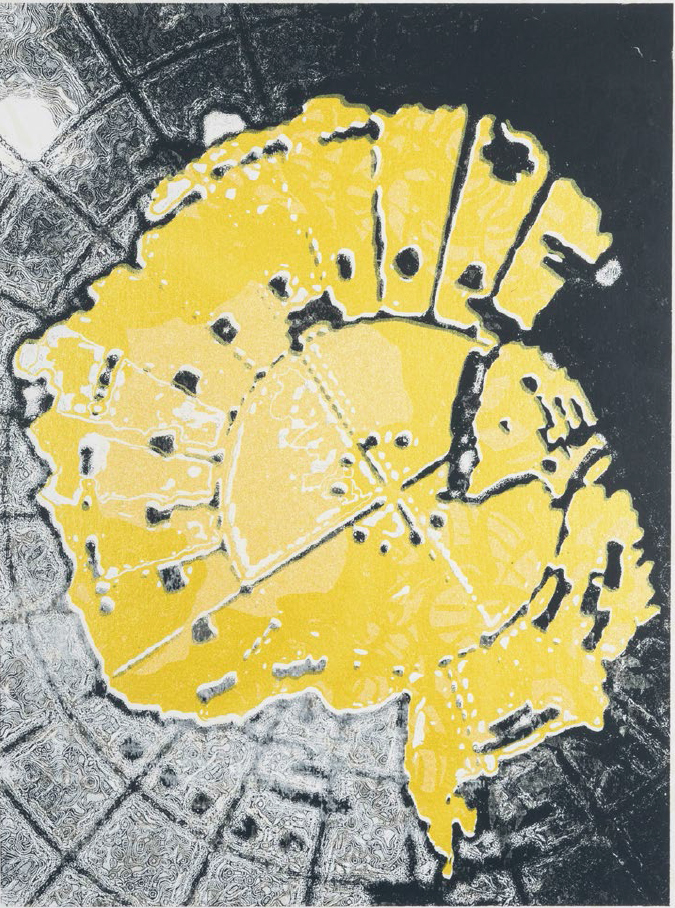
Antarctica, 2015
Silkscreen on paper
Xavier Cortada created this print using the same screen-printing press artist Robert Rauschenberg used during his time at the Rauschenberg Residency: Rising Waters Confab. Cortada channeled the methodology of Rauschenberg by creating a print featuring a photograph of the map of Antarctica. While Cortada’s Antarctic ice paintings visually communicate the process of melting ice, this print uses an image of the continent itself to contextualize the importance of its role in sea level rise. In its abstraction, the print reflects how the continent shrinks, deforms, and melts due to the steady rise of global temperatures.