Airport Parking Reservation Systems and Techniques (2025)
Chapter: 2 Literature Review Summary Findings
CHAPTER 2
Literature Review Summary Findings
Research focusing on the use and operation of airport OBSs is limited. However, there are several studies that focus on the role of OBSs as a supporting technology and business process for the airport parking business. Appendix A contains an annotated bibliography included as part of this synthesis. The studies most useful for informing this synthesis are three ACRP publications: ACRP Report 24: Guidebook for Evaluating Airport Parking Strategies and Supporting Technologies (Jacobs Consultancy 2009), ACRP Research Report 225: Rethinking Airport Parking Facilities to Protect and Enhance Non-Aeronautical Revenues (InterVISTAS Consulting, Inc. et al. 2021), and ACRP Synthesis 118: Airport Parking Pricing Strategies (Mandle and Alandou 2022).
Together, the existing literature offers insights into the following elements of OBSs:
- OBS and parking management,
- Customer experience benefits, and
- Airport revenue strategies.
2.1 OBS and Parking Management
OBSs enable airport parking operators to obtain future demand information for their facilities, enable these airports to tailor product offers to customers, and facilitate seamless entry and exit through parking facilities by streamlining validations and payments (Jacobs Consultancy 2009).
OBSs may be included as components in PARCSs or connected through software to an existing PARCS. Airport management typically collaborates with equipment vendors to set up these systems and determine which parking products and portions of inventory will be made available for reservations.
By analyzing future booking information alongside historical patterns of parking demand during similar days of the week, seasons, and holidays, airport management can improve pricing offers in their OBS to increase revenue and improve parking occupancy.
Airports are also working to reduce or eliminate cash transactions in their parking facilities. By integrating payment information into the OBS process, airport management can link reservations to the PARCS, enabling frictionless entry into and exit out of facilities via License Plate Recognition (LPR) or the customers’ use of Quick Response (QR) codes or barcodes at entry and exit points (Jacobs Consultancy 2009; InterVISTAS Consulting, Inc. et al. 2021).
2.2 Customer Experience Benefits
The use of OBSs provides several benefits directly to the customer, including the convenience of securing a guaranteed parking space in their chosen facility (Jacobs Consultancy 2009). This feature can be particularly beneficial when parking facilities are near or at capacity. Additionally,
parking reservations enabled by OBSs at some airports offer discounts to customers, typically during less busy (or “off-peak”) periods.
For airport management, the information collected in the parking reservation may be added to the airport’s CRM database (Jacobs Consultancy 2009). This typically would include the customer’s residence, flight itinerary, length of stay, and which parking product they selected. Together, these data can be used to tailor parking offers during the reservation process itself and for follow-up communications, including the pushing of offers for future parking and other airport services.
2.3 Airport Revenue Strategies
Similar to airlines selling airplane seats and hoteliers selling hotel rooms, offering reservations through an OBS allows airports to optimize yields from parking stays (Jacobs Consultancy 2009). In yield management, it is recognized that during periods of low demand, discounting an airport’s posted or drive-up rate can increase occupancy and optimize revenues. This strategy helps airport management attract customers away from competing airport access options, such as off-airport parking providers, ride app services, or rides from friends and family.
During high-demand periods, the airport may choose not to offer discounts at all but attract the customer solely by offering a guaranteed space. Through the booking process, an OBS also enables an airport parking operator to offer an upgrade to a customer’s parking experience, such as offering a spot in a premium parking lot adjacent to the terminal instead of a remote economy product requiring shuttle transport to access the terminal.
In addition to increased revenues, another OBS benefit is the ability to increase awareness of parking products and to collect advanced prepaid revenues, “securing” the customer (Jacobs Consultancy 2009; InterVISTAS Consulting, Inc. et al. 2021). As illustrated in the matrix of Table 2.1, airports such as Ronald Reagan Washington National Airport (DCA), Gerald R. Ford International Airport (Grand Rapids) (GRR), and San Francisco Bay Oakland International Airport (OAK) feature an OBS widget directly on the airport’s home page, allowing customers to begin making reservations without navigating to other websites. An example is shown in Figure 2.1. Others, such as Columbia Metropolitan Airport (CAE), Charlotte Douglas International Airport (CLT), and DFW, have direct links to the parking OBS. In addition, all of the airports listed in Table 2.1 have mobile-friendly web interfaces. Most airports also have official mobile apps, allowing their customers to book directly through the airport app (as illustrated in the example of CLT in Figure 2.2), or have widgets or links that bring customers to an OBS web-based interface.
2.4 Airport Capacity Challenges
Airports experiencing capacity challenges during peak travel periods need to consider operational and customer experience impacts when offering online parking reservations. For instance, as illustrated in Figure 2.3, DCA had to close parking for non-reserved customers at North Parking 2 despite having some available capacity to accommodate customers with online parking reservations. Airports may limit the amount of OBS inventory to accommodate demand. As discussed later in Section 3.2, “Key Findings,” according to the survey responses in this synthesis, the amount of inventory that is made available for online reservations is between 10% and 40% of available capacity.
Table 2.1. Example airports and OBS communication channels.
| Airport | OBS Widget on Home Page | Mobile Web Interface | Booking via Mobile App |
|---|---|---|---|
| CAE | - (Link to Booking Page) |
✔ | ✔ (Link to Web-Based Booking Page) |
| CLT | - (Link to Booking Page) |
✔ | ✔ (Directly Through the Airport App) |
| DCA | ✔ | ✔ | ✔ (Widget to Web-Based Booking Page) |
| DFW | - (Link to Booking Page) |
✔ | ✔ (Directly Through the Airport App) |
| FAR | ✔ | ✔ | - (No Airport App) |
| GRR | ✔ | ✔ | ✗ (Not Possible Through Airport App) |
| GSP | ✔ | ✔ | - (No Airport App) |
| IAD | ✔ | ✔ | ✔ (Widget to Web-Based Booking Page) |
| LAX | - (Link to Booking Page) |
✔ | - (No Airport App) |
| MHT | - (Link to Booking Page) |
✔ | - (No Airport App) |
| MSY | - (Link to Booking Page) |
✔ | - (No Airport App) |
| OAK | ✔ | ✔ | - (No Airport App) |
| OMA | ✔ | ✔ | ✔ (Widget to Web-Based Booking Page) |
| PHX | ✔ | ✔ | - (No Airport App) |
| SAN | ✔ | ✔ | - (No Airport App) |
| SDF | - (Link to Parking Page) |
✔ | - (No Airport App) |
| SFO | ✔ | ✔ | - (No Airport App) |
| STS | - (Link to Booking Page) |
✔ (No Direct Link from the Mobile Version of the Home Page) |
- (No Airport App) |
Source: Respective airport websites
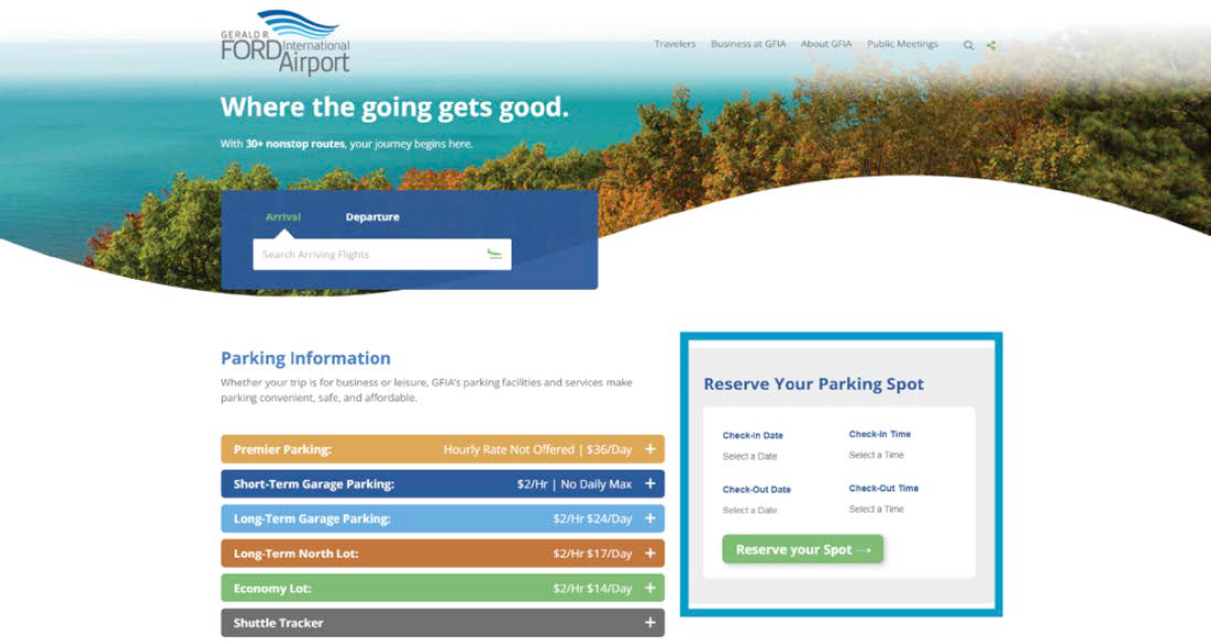
Figure 2.1. Example airport with OBS widget on the homepage (emphasis added via the blue square).
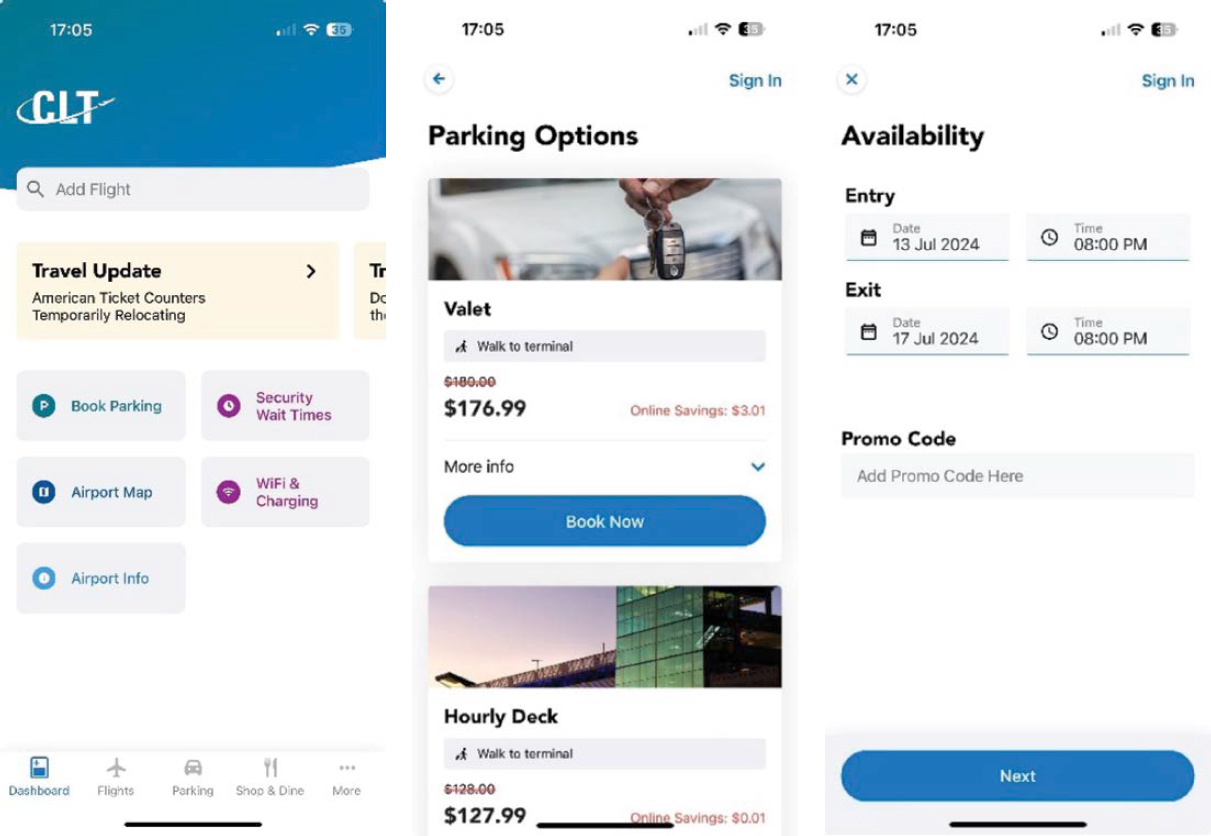
Figure 2.2. Example airport app with OBS functionality—various screenshots.
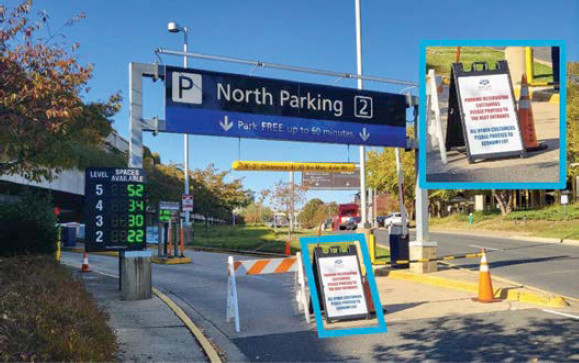
Figure 2.3. Parking diversions at DCA.


